Lab Results
How reference ranges are actually built
Why "normal" is a statistical description of the people who got tested — not a definition of health.
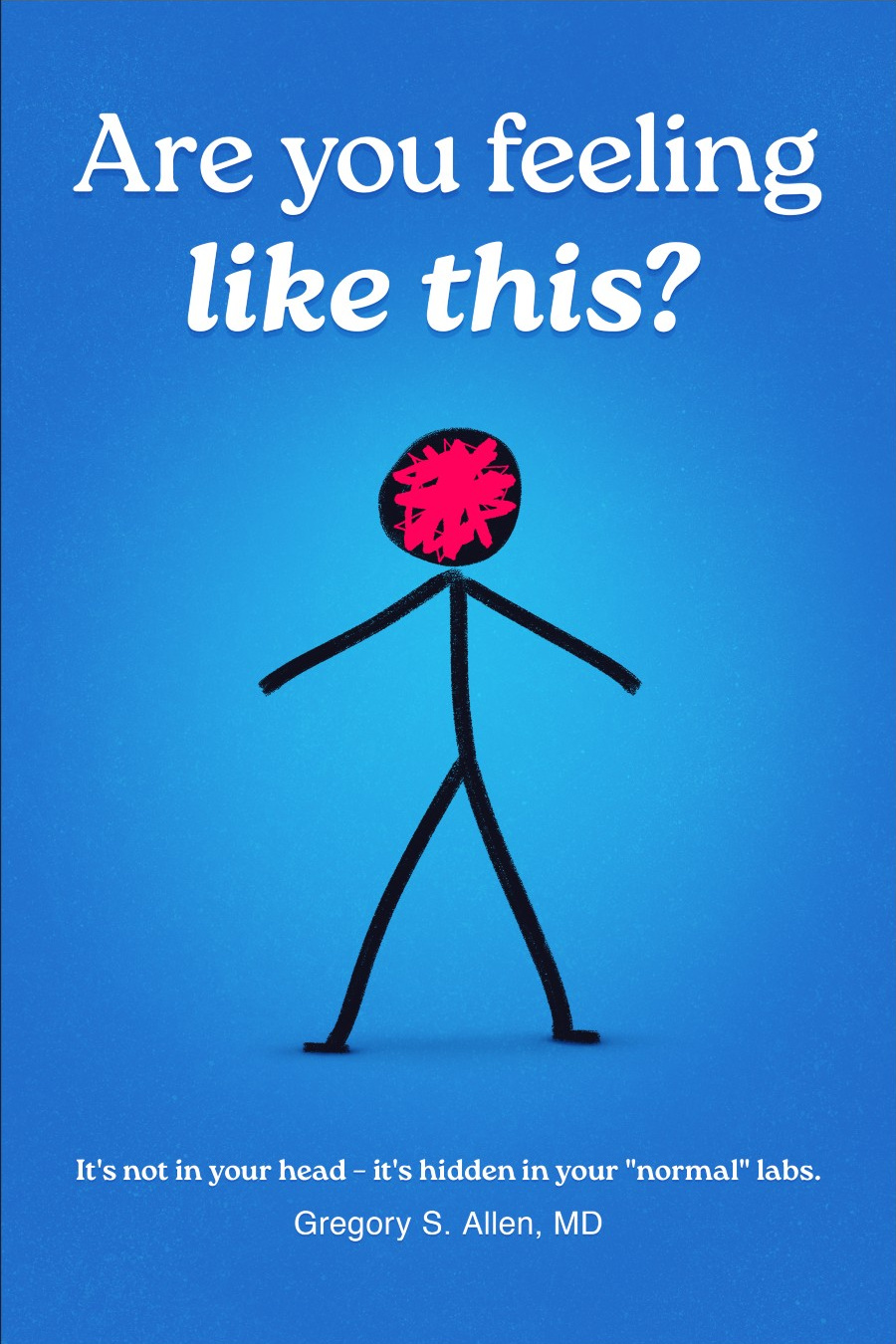
Coming soon →Tired all the time. Foggy. Flat. Off. You've been told everything looks fine — but you know it isn't. Are You Feeling Like This? is one doctor's honest guide to the Gray Zone between "normal" and well — and to the questions worth asking when the answers you've been given don't fit.
I'll email you the moment the book is released.
"For the first time, I was reading a physician who refused to dismiss what patients know about their own bodies."
If even a few of these feel familiar, you're in the right place. You're not imagining it. And you're far from alone.
It's where many people keep showing up, keep performing, and keep carrying what needs to be carried — long after they've stopped feeling well. Standard testing matters. But it isn't always the whole story.
A doctor's clear, compassionate map for the in-between space — written for the person who's still managing, still responsible, still outwardly "okay," but who knows something has changed.
Understand the difference between meeting a baseline reference range and your body actually functioning the way it was designed to — and why so many people fall in the gap.
A plain-language walk-through of what's happening at the cellular level when energy fades, focus slips, and mood quietly shifts — without quick fixes or simplistic answers.
The places evaluation often falls short, the questions worth asking your doctor, and the broader signals that deserve attention long before a crisis appears on paper.
Real, stepwise change — not transformation overnight. How to rebuild steadier energy, clearer thinking, and a stronger sense of being present in your own life again.
These stories appear in the book's Patient Stories chapter. Each is real — shared with permission, or de-identified and composited to protect patient privacy. Read all six on the stories page.
"I feel so good. I can get through my whole day without needing a nap. I'm actually present with my kids — I can engage, I can play, I can enjoy them again."
"I'm excited for each and every day. I'm excited to graduate and excited to move forward with my future — where before it scared me."
"For the first time, I feel like I'm not broken."
These stories are from the book and are not a prediction of your outcome. Responses to treatment differ widely from person to person; some people improve, some improve only partially, and some do not respond. The book includes a sixth story that did not resolve neatly — on purpose. Nothing here should be read as a promise of results.
Take the 60-second hormone signal quiz. Take the 60-second hormone signal quiz to see how your symptoms line up — and what to do with the answer.
Symptoms that go unexplained often go unaddressed. Looking earlier — and more thoroughly — gives you and your physician more to work with.
What starts as occasional fatigue and brain fog becomes the new normal. Energy, focus, mood, and motivation continue to fade, often year over year, mistaken for "just aging."
Without a deeper look, symptoms get attributed to stress, lifestyle, or a passing season. Real underlying signals stay hidden — and untreated.
Hormonal signaling influences how we recover, sleep, build muscle, and stay sharp. When a hormonal contribution goes unexamined, those changes are often chalked up to aging without anyone checking.
Most painful of all: a slow erosion of the person you used to be — your drive, your joy, your sense of being fully present in your own life.
Practical, plain-language pieces on hormone health, energy, and longevity — adapted from the book. Launching alongside it.
Why "normal" is a statistical description of the people who got tested — not a definition of health.
Coming soon →The book cites a large primary-care study finding that nearly four in ten men over 45 have low testosterone — and only a small fraction are treated for it.
Coming soon →It rarely starts the way you'd expect. A guide to recognizing the early signal patterns.
Coming soon →Leave your name and email and I'll let you know the moment the book is available to order.
I'll email you the moment the book is released.